Why Sex Is Healthy
June 30, 2026
Strategies for Kissing Well
June 30, 2026
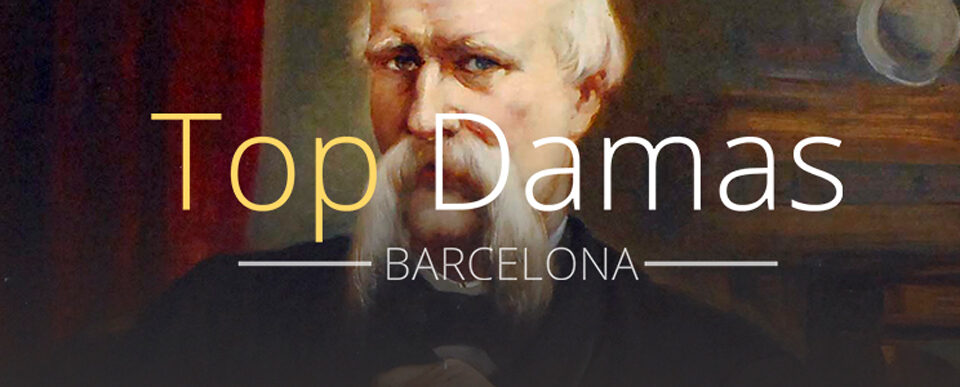
Pompeu Fabra: 1868–1948
Born in 1868 in the former town of Gracia, which is now part of Barcelona.
When she was five years old, the First Spanish Republic was proclaimed in 1873, and her father was elected mayor of Gracia. When she turned six, the family moved from the La Salud neighborhood in Gracia to Barcelona. Pompeu Fabra was the youngest of twelve siblings, although only two of them would live to adulthood.
Fabra stood out for his keen interest in philology, which he taught himself while pursuing his studies in industrial engineering, and in 1902 he won the competitive examination for the chair of chemistry at the Bilbao School of Engineering, the city where he lived until 1912.
In 1918, with the publication of *Gramática Catalana*, which was adopted as the official standard, the most productive phase of his philological work began.
In 1924, Pompeu Fabra’s desire to share his linguistic reflections led him to publish *Las Converses filològiques*, a series of short articles that raise and attempt to resolve the most common questions about the language.
Pompeu-Fabra Dictionary: In 1932, he published *El Diccionari general de la llengua catalana* and *El Curs mitjà de gramática catalana*, a textbook for schools that was republished in 1968 under the new title *Introducció a la gramática catalana*.
That same year, thanks to his reputation, Fabra was appointed to the chair of Catalan language at the University of Barcelona, marking the first time that the Catalan language was officially recognized in the university setting.
The Institute of Catalan Studies used Pompeu and Fabra’s dictionary as a blueprint for a new official dictionary; the criteria that guided its creation were:
-The exclusion of archaisms and dialectal expressions.
-The rejection of terms borrowed from other languages that would replace native Catalan words or prevent the creation of new terms.
-The incorporation of technical terms of Greco-Latin or universal origin, adapting them to the Catalan language.
Fabra had a distinguished career as a sports executive.
After having been a member of the tennis team at Fútbol Club Barcelona, he was also an avid hiker and a member of the Catalonia Hiking Center.
During the Second Republic, he served as the first president of the Catalan Union of Sports Federations.
His popularity did not go unnoticed by the politicians of his time; during Primo de Rivera’s dictatorship, he was offered a seat on the Royal Spanish Academy as a way to downplay his Catalan nationalist stance, an offer that Fabra rejected.
Later, during the civil war, Captain General Gonzalo Queipo de Llano referred to him in his speeches as an enemy of Spain.
In 1946, he presided over the Montpellier Literary Games.
In 1980, a street in the La Salud neighborhood of Gràcia in Barcelona—where he was born—was named after him.
Pompeu Fabra University in Barcelona was founded on June 18, 1990.