
B-Travel: Travel in the company of beautiful escorts
June 30, 2026
Margarida Xirgú
June 30, 2026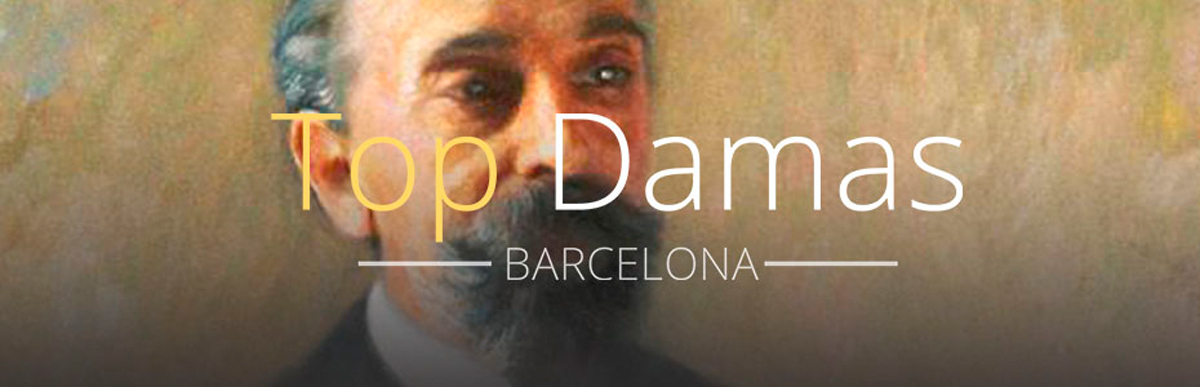
Joan Maragall: 1860 / 1911
Joan Maragall is the foremost exponent of social romanticism in Barcelona poetry; known as the poet of the “living word” for the aesthetic and human value of his poetry, he is also a translator and author of essays of cultural, ideological, and political interest.
A member of the modernist movement with a romantic spirit, he viewed poetry as a natural, non-elitist expression that was close to society and capable of influencing its consciousness.
In his work, the city is a source of fear, love, and concern; in fact, throughout his life, Joan Maragall would consistently critique Catalan bourgeois society, striking a delicate balance between his romantic conventionalism and his awareness of the country’s problems and reality.
Maragall lived through a turbulent period.
Articles such as “New Ode to Barcelona,” in which he engages in a dialogue with a city he loves but finds difficult to understand, reveal his unease, as he lived through difficult events that he sought to capture in his works: from the bomb planted by an anarchist at the Liceu Theater to Barcelona’s Tragic Week (1909), which left a deep mark on him and to which he—practically the only intellectual to do so—responded with the articles “L’església cremada,” “Ah, Barcelona…,” *La ciutat del perdó*, insisting on the share of responsibility that fell to the Catalan bourgeoisie.
He was a founding member of the Philological Section of the Institut d’Estudis Catalans and was named a “Gai Saber” master (1904)
His poetic works include such well-known poems as “El cant de la senyera,” “Cant espiritual,” “El comte Arnau,” “La vaca cega,” “La sardana,” and “Oda a Espanya.” His translations of Nietzsche, Goethe, Pindar, Novalis, and Homer are also noted.