How to Seduce a Natural Beauty
June 30, 2026
B-Travel: Travel in the company of beautiful escorts
June 30, 2026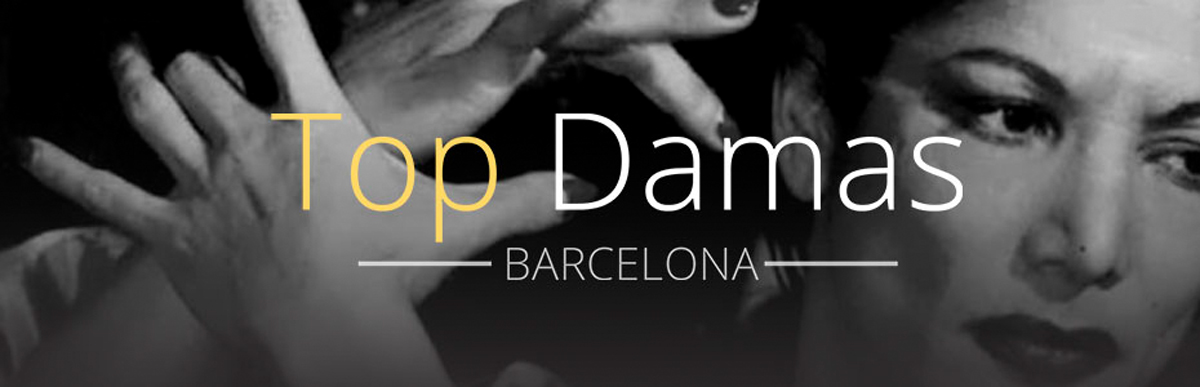
Carmen Amaya is one of the icons of flamenco dance. She revolutionized the traditional expression of this folk dance with a more passionate approach, highlighting the strength and pride of Romani culture.
Although the exact date of his birth is unknown, 1918 seems to be the most likely year.
Carmen learned to dance and sing on the streets, where she earned a little money alongside her father.
They nicknamed her “La Capitana.” At the age of six, she made her debut at the restaurant “Les Set Portes” in Barcelona, but it was while dancing at the “La Taurina” theater in Barcelona that she was discovered by the critic Sebastián Gasch, which brought her recognition and a meteoric rise in her career.
“Suddenly, a leap. And the little gypsy girl was dancing. Something indescribable. Soul. Pure soul.
Emotion made flesh. The “tablao” vibrated with unprecedented intensity and incredible precision.
La Capitana was a raw product of nature. Like all Gypsies, she must have been born dancing. She was the antithesis of school, the antithesis of academia.
Everything I knew, I must have known at birth.
Soon, the audience found itself captivated, bewildered, and overwhelmed by the powerful conviction radiating from La Capitana’s face, by her fierce hip movements, by the boldness of her pirouettes and the ferocity of her broken turns, whose animalistic fervor matched the astonishing precision with which she executed them.
The frenzied tapping of her heels and the erratic movement of her arms—which at times rose, excited, and at other times slumped, exhausted, abandoned, lifeless, gently swaying from her shoulders—are still etched in our memory like indelible images.
“What made the deepest impression on us when we saw her dance was her intensity, which twisted her into dramatic contortions—her passion, her violence, her wild impetuosity as a dancer of pure lineage.”
In 1929, he was part of the lineup at the Villa Rosa tablao, which was run by Miguel Borrull in Barcelona,
In 1930, she performed at the International Exposition and toured throughout Spain with Manuel Vallejo’s company; upon her return to Barcelona, she was recommended by José Cepero to perform at the Teatro Español.
In 1935, Luisita Esteso introduced her in Madrid in a show at the Coliseo, and that same year she performed at Madrid’s La Zarzuela theater alongside Conchita Piquer and Miguel de Molina, as well as at the Fontalba, and took part in a musical revue in Barcelona.
She appeared in the film “La Hija de Juan Simón” alongside Angelillo, but it was after her performance in the film “María de la O” that she embarked on a new tour of the Spanish provinces; the Spanish Civil War caught her by surprise in Valladolid and forced the troupe to relocate to Lisbon, crossing the Atlantic with her father, the crew, and Pelao Viejo.
She made her debut at the Maravillas Theater in Buenos Aires to great acclaim and public anticipation, alongside Ramón Montoya and Sabicas.
After a year at the Maravillas, he went on a four-month tour of cities in the interior of Argentina, before returning once again to the stages of Buenos Aires.
But his tour would continue (1936–1940) around the world, taking him to countries such as Brazil, Chile, Colombia, Cuba, Uruguay, Mexico, Venezuela, London, and Paris.
She made films in Buenos Aires alongside Miguel de Molina and was admired by the musicians Arturo Toscanini and Leopold Stokowsky, who publicly praised her.
He performed in 1941 at Carnegie Hall in New York with Sabicas and Antonio de Triana.
They say he built a bonfire to grill some sardines on skewers using small tables from the Waldorf Astoria’s Imperial Suite, valued at over $1,800 at the time.
Perhaps because her spirit was as wild as that of the New World, the then-president of the United States, Franklin Roosevelt, invited her to perform at a party at the White House; Roosevelt also gave her a bolero jacket encrusted with diamonds.
In 1942, Carmen was the star attraction at the Hollywood Bowl, performing a rendition of Manuel de Falla’s “El amor brujo” with the Philharmonic Orchestra before an audience of twenty thousand people; she appeared on magazine covers, recorded for record labels, and starred in numerous films.
He performed at the Théâtre des Champs-Élysées in Paris, then in London and the Netherlands, followed by Mexico, then back to New York and London, continuing on to South Africa and Argentina, and finally returning to Europe.
Having become an international star, she decided to return to Spain in 1947 to perform at the Teatro Madrid in the show “Embrujo español,” where the legend of her genius continued to grow through colorful stories that were difficult to verify.
In 1948, he achieved a resounding success at the Princess Theater in London.
In 1950, she toured Argentina as part of her tour of the Americas. In 1951, she performed in Rome and at the Tivoli Theater in Barcelona, continuing on to Madrid, Paris, Germany, and Italy.
In London, he received congratulations from the Queen, and the event was featured in various publications.
They continued their tours throughout Northern Europe and the Americas, with major successes such as their performances at the Westminster Theater in London and the Teatro de La Zarzuela in Madrid in 1959.
His last film was “Los Tarantos,” directed by Rovira-Beleta in 1963, the year he died at the age of 45 from a kidney condition.
His death shocked the entire flamenco world and, in particular, the Romani community, which brought together Romani people from Spain and France for his funeral.
Her remains rest in Santander alongside those of her husband
In 1966, a monument to him was unveiled in Barcelona, in Montjuïc Park. In Buenos Aires, a street was named after him.
León and Solano composed the copla “Aquella Carmen” in her memory.