The Virtual Pleasure of Fetishism
June 30, 2026
Coping with Quarantine Without Escorts in Barcelona
June 30, 2026
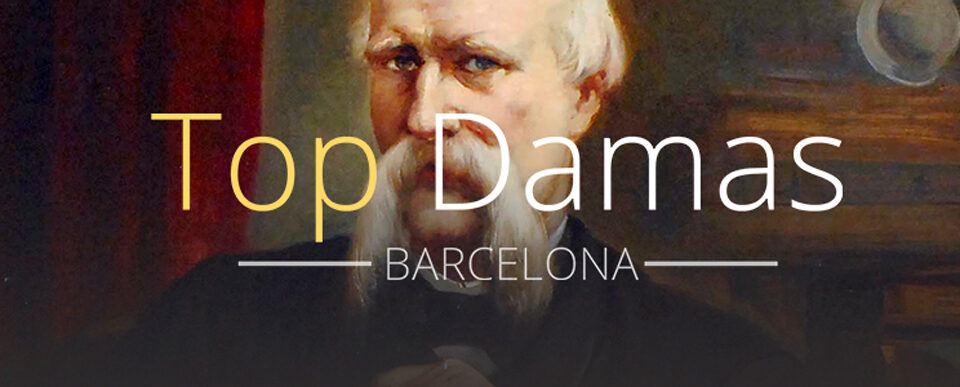
Santiago Rusiñol: 1861–1931
He was a prominent figure in Barcelona’s intellectual circles; he was a painter, a bohemian playwright, and a storyteller. Despite his artistic forcefulness, his personality was ironic, humorous, and, at times, carefree. He was a driving force behind Catalonia’s literary and cultural Renaixença.
His family came from the textile industry in Manlleu. He was a student of Tomás Moragas at the watercolor school in Barcelona.
In Paris in 1889, he became acquainted with Symbolism and plein air painting, alongside Ramón Casas and Ignacio Zuloaga.
After returning to Spain, he frequented the literary gatherings at the Els Quatre Gats café in Barcelona. Rusiñol had money and charm, which made him a desirable match. Many young women who were regulars at “Els Quatre Gats” tried to win his heart, but it was rumored that he was aloof because of his greed, and people often quoted one of his sayings: “Love passes, but marriage remains.”
His comfortable social and economic status allowed him to found the “Cau Ferrat” studio-museum in Sitges and to take frequent trips, including one to Mallorca with Joaquín Mir in 1901;in 1908 he received the medal from the National Exhibition of Fine Arts, and in 1910 he traveled to Buenos Aires, Rosario, and Córdoba for the centennial of the May Revolution.
Early in his career, his paintings included modernist-inspired human figures, portraits, and symbolic compositions, but in his later years he painted only landscapes—particularly those of the Gardens of Aranjuez and La Granja—featuring both rural and urban Impressionist themes.
Among his most notable works are *La morfina* and *La medalla*, both from 1894.
His literary work is varied; he wrote for newspapers such as *La Vanguardia* and *L’Esquella de la Torratxa*, prose poems such as “*Oracions*” in 1897, plays such as “*L’alegria que passa*” in 1898, “Cigals i formigues” in 1901, “La bona gent” in 1906, and works depicting local customs such as “L’auca del senyor Esteve” in 1907—which Rusiñol adapted for the theater in 1917— “La niña Gorda” in 1914, “El català de La Mancha” in 1917, and “En Josepet de Sant Celoni.”